
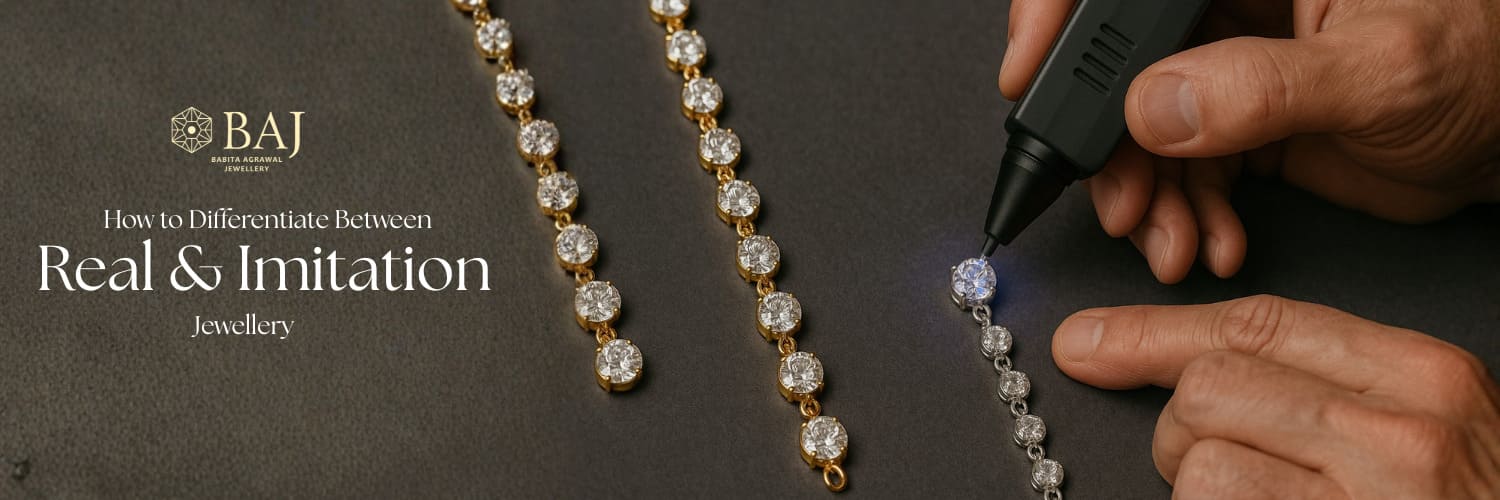
How to Differentiate Between Real and Imitation Jewellery?
In today’s market, the beauty of imitation jewellery has reached new heights, making it difficult even for seasoned buyers to tell real from fake. However, knowing how to differentiate between real and imitation jewellery is essential if you’re investing in gold, diamond, or precious gemstone ornaments. Whether you’re shopping for an elegant gold chain or a dazzling diamond ring, recognising authenticity helps protect your investment and ensures lasting value.
At Babita Agrawal Jewellery, authenticity is the foundation of every piece we craft. Let’s explore the key differences between real and imitation jewellery, along with practical tips to identify genuine ornaments.
1. Check for Hallmark or Certification
The easiest way to identify real gold or diamond jewellery is through its certification and hallmark.
A hallmark is an official stamp that verifies the purity and authenticity of the metal.
Here’s what to look for
Gold Jewellery:
- Look for the BIS Hallmark in India, which includes details like the karat (e.g., 22K or 18K), BIS logo, jeweller’s identification number, and year of hallmarking.
- New gold pieces also carry a HUID (Hallmark Unique Identification Number), a unique code ensuring traceability and authenticity.
Diamond Jewellery:
- Genuine diamond pieces come with certifications from reputed gemological laboratories such as GIA (Gemological Institute of America) or IGI (International Gemological Institute).
- The certificate includes information on diamond cut, clarity, colour, and carat weight.
If a seller hesitates to provide certification, it’s a clear red flag.
2. Examine the Price
The price difference between real and imitation jewellery is often substantial. Real gold and diamond jewellery prices fluctuate with market rates, while imitation jewellery remains comparatively inexpensive.
For instance:
- Real gold chains or diamond studs will be priced according to purity, weight, and craftsmanship.
- Artificial jewellery, no matter how visually appealing, will not reflect market-linked pricing.
When an ornament looks too luxurious but costs suspiciously less, it’s likely imitation.
3. Test the Weight
Authentic jewellery is typically heavier because of the metal density and gemstone quality. In contrast, imitation or costume jewellery uses lighter alloys and synthetic stones.
Quick Tip:
Hold the piece in your hand. Real gold, silver, or platinum will feel heavier compared to imitation made from copper, brass, or plastic-coated materials.
4. Look Closely at the Finish and Craftsmanship
Genuine jewellery showcases refined detailing and flawless finishing. Skilled artisans ensure every edge, clasp, and prong is smooth and well-polished.
Key indicators of real jewellery quality
- Consistent shine without paint or coating.
- Secure gemstone settings so that stones won’t fall out easily.
- Engraved hallmark or certification number (not printed or painted).
On the other hand, imitation jewellery may have uneven polish, visible glue marks, or colour variations that wear off quickly.
5. Perform a Magnet Test
Gold, silver, and platinum are non-magnetic metals.
If your jewellery is attracted to a magnet, it likely contains iron or nickel, common in imitation pieces.
How to test:
- Use a small household magnet.
- Bring it close to your jewellery.
- If it sticks, it’s not real gold or silver.
(Note: Some alloys used in real jewellery may show mild attraction, so this test should not be the sole deciding factor.)
6. Examine the Gemstones
Diamonds and precious gemstones are another area where imitation thrives. Cubic zirconia and moissanite are often used as diamond substitutes.
Ways to spot a real diamond:
- Real diamonds refract light differently; they sparkle with a combination of white and colored light (known as “fire”).
- Try the fog test: Breathe on the stone. Real diamonds won’t fog up, while imitation ones will retain fog for a few seconds.
- Ask for a laser inscription or certification on the diamond girdle.
Babita Agrawal Jewellery ensures all diamond jewellery is certified and ethically sourced, guaranteeing long-lasting brilliance and value.
7. Observe Tarnishing or Discolouration
Imitation jewellery often tarnishes or loses colour over time due to oxidation or low-quality plating.
Real gold and platinum, however, maintain their shine and do not react with air or moisture.
Pro Tip:
- If the jewellery leaves a greenish or black stain on your skin, it’s likely imitation.
- Real gold will never cause such discolouration.
8. Check for Sound and Feel
While it may sound surprising, authentic jewellery produces a distinct sound when gently tapped together, a soft, rich tone.
In contrast, imitation jewellery often produces a dull or tinny sound because it’s made from lighter, cheaper materials.
Also, real jewellery feels smoother and more luxurious to touch.
9. Ask for the Invoice and Return Policy
Reputed jewellers always provide a detailed tax invoice mentioning:
- Gold purity (e.g., 18K, 22K)
- Stone weight (diamond or gemstone)
- Making charges
- Taxes and hallmark details
If a jeweller cannot provide a valid invoice or return policy, reconsider your purchase.
At Babita Agrawal Jewellery, every product comes with a proper bill and certification, ensuring complete transparency and trust.
10. Consult an Expert
If you still have doubts, take your jewellery to a trusted jeweller or appraiser for verification.
They can test the metal purity using tools like:
- Acid testing kits
- Electronic gold testers
- XRF (X-ray fluorescence) analysis
A professional opinion helps you confirm authenticity and understand the true value of your jewellery.
Why Authentic Jewellery Matters?
Owning real jewellery isn’t just about prestige; it’s about heritage, security, and trust.
Here’s why it matters:
- Long-Term Investment – Real gold and diamond jewellery appreciates over time.
- Emotional Value – Genuine jewellery becomes a timeless heirloom.
- Resale and Exchange Benefits – Authentic pieces can be exchanged or resold easily.
- Skin Safety – Real jewellery is hypoallergenic and safe for long-term wear.
Final Thoughts
In a world where imitation pieces look remarkably real, distinguishing genuine jewellery requires a keen eye and awareness.
Always buy from reputable jewellers who provide certification, hallmarking, and transparent billing.
At Babita Agrawal Jewellery, every piece is a symbol of authenticity, elegance, and craftsmanship, from radiant diamond necklaces to intricate polki sets. Our focus is not just on design but also on ensuring purity and trust with every ornament.
So, the next time you invest in jewellery, remember real beauty lies in authenticity. Choose genuine, certified, and hallmarked jewellery that shines forever.
About Author

Babita Agrawal
Babita Agrawal is a visionary jewellery designer with over 30 years of experience in the industry. Founder of Babita Agrawal Jewellery, she began her journey from a small cabin and built one of Mumbai’s most admired boutique jewellery brands. Her commitment to blending traditional aesthetics with modern artistry defines each elegant creation, making her a respected name in luxury jewellery.