
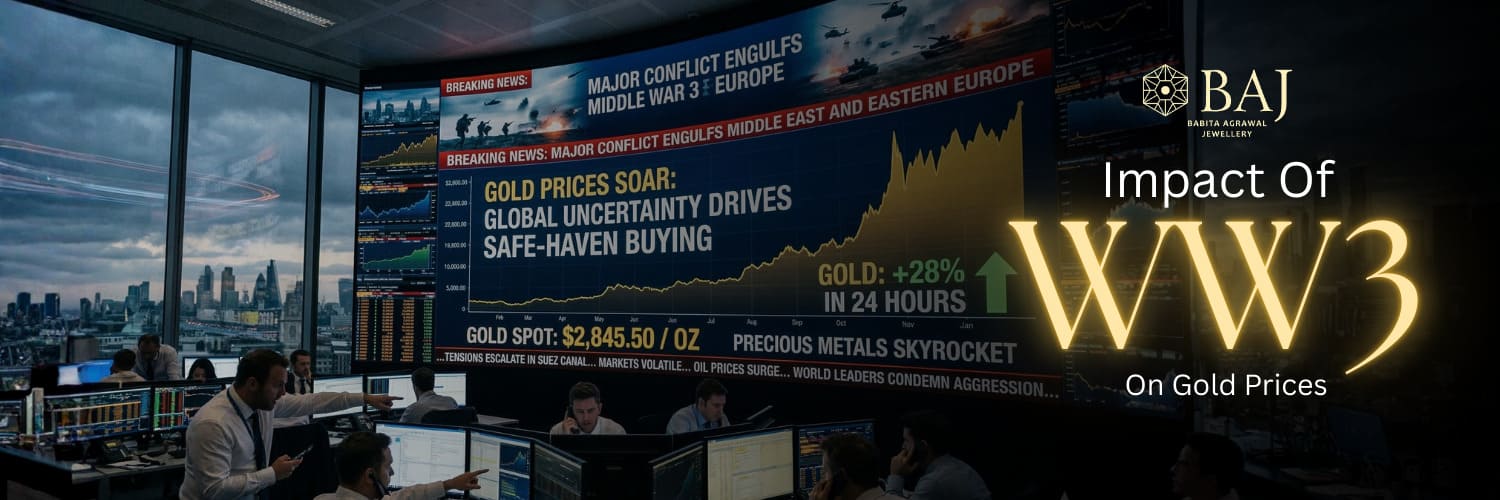
Global Conflicts and Gold Prices: How Wars Impact the Value of Gold
Gold has always played a special role during times of uncertainty. Throughout history, whenever the world has faced wars, geopolitical tensions, or economic instability, gold has often become one of the most sought-after assets. Investors, governments, and even ordinary households turn to gold when they want to protect their wealth from unpredictable events.
This is why discussions about global conflicts often lead to one important question: How do wars impact gold prices?
While no one can predict the exact outcome of geopolitical events, history shows that conflicts tend to influence gold markets in significant ways. Understanding this relationship helps investors make better decisions and appreciate why gold is considered a “safe-haven” asset.
Why Gold Is Called a Safe-Haven Asset?
A safe-haven asset is something that investors trust during times of crisis. Gold has earned this reputation over centuries because it is not tied to any single country, government, or currency.
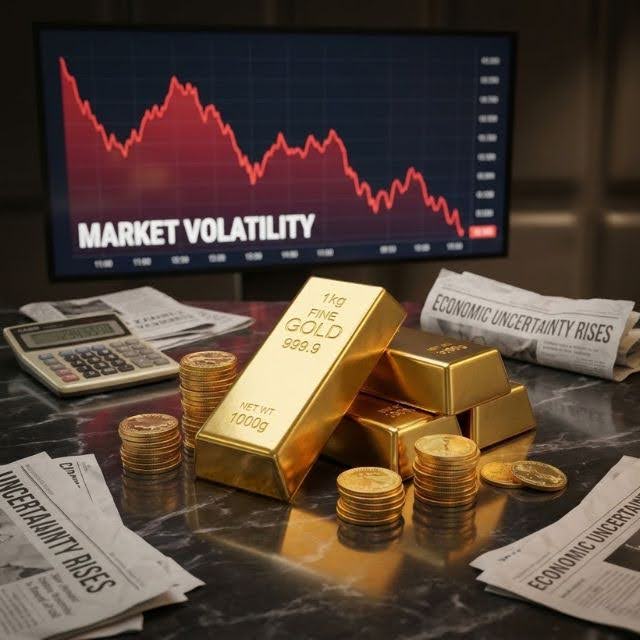
Unlike paper money, gold cannot be printed or created at will. Its supply is limited, and its value has been recognized globally for thousands of years. Because of this universal acceptance, gold often becomes a financial shelter when other markets appear risky.
During wars or geopolitical conflicts, stock markets may become volatile, currencies can weaken, and economic growth may slow. In such situations, investors frequently shift their money toward assets that are perceived as stable. Gold is usually one of the first choices.
How Wars Influence Investor Behavior?
When news of global conflict emerges, uncertainty increases in financial markets. Investors begin to reassess their portfolios and look for ways to reduce risk.
One of the most common reactions is a shift away from high-risk investments such as equities or speculative assets. Instead, investors allocate more funds to safer assets like gold.
This sudden increase in demand can push gold prices higher. In many cases, the mere fear of escalating conflict is enough to trigger strong buying activity in the gold market.
Historical Examples of Gold Rising During Conflicts
Throughout history, geopolitical conflicts and global instability have often influenced gold prices. During uncertain times, investors tend to turn to gold as a safe haven to protect their wealth.
- 1970s Global Tensions and Inflation
During the 1970s, political tensions and economic instability led to a sharp rise in gold prices. High inflation pushed many investors toward gold to protect their wealth. - The Gulf War in the Early 1990s
The Gulf War created uncertainty in global energy markets, leading to a temporary increase in gold demand and price movements. - Recent Geopolitical Tensions
In recent years, conflicts and geopolitical tensions in various regions have periodically increased gold prices as investors sought safer assets. - Gold as a Safe Haven in Uncertain Times
These historical examples show that while gold does not rise during every conflict, global instability often increases its appeal as a store of value.
The Role of Central Banks During Global Tensions
Central banks around the world also play an important role in gold demand during times of geopolitical uncertainty.
Many governments hold gold reserves as part of their national financial strategy. These reserves act as a safeguard in case global financial systems become unstable.
During periods of international tension, some central banks increase their gold holdings to diversify their reserves and reduce reliance on foreign currencies. This institutional demand can contribute to upward pressure on gold prices.
Currency Instability and Gold Prices
Wars and geopolitical conflicts can also affect the strength of currencies. When investors lose confidence in a particular currency or financial system, they often move their wealth into assets that are perceived as more stable.
Gold frequently benefits from this shift. Because it is priced internationally and traded worldwide, gold can act as a hedge against currency depreciation.
For example, if a country experiences economic disruption due to conflict, its currency may weaken. As a result, gold prices in that currency often rise because the metal retains its global value.
Why Gold Does Not Always Rise Immediately?
Gold is often seen as a haven during wars and geopolitical tensions. However, its price does not always increase instantly because several economic factors influence the market at the same time.
- Short-Term Market Volatility – During the early stages of a conflict, financial markets may react unpredictably as investors process new developments.
- Influence of Other Economic Factors – Interest rates, inflation expectations, and overall global economic conditions can also impact gold prices.
- Impact of Rising Interest Rates – If interest rates increase significantly, investors may temporarily shift funds to interest-bearing assets instead of gold.
- Long-Term Safe Haven Demand – Over time, gold often regains investor interest as a reliable asset for protecting wealth during periods of uncertainty.
What does this mean for Long-Term Investors?
For long-term investors, the relationship between global conflicts and gold prices highlights an important principle: diversification.
Gold is rarely meant to replace other investments entirely. Instead, it serves as a balancing element within a broader portfolio.
When stock markets perform well, gold may not always deliver the highest returns. But during periods of uncertainty or geopolitical tension, gold can provide stability and protection.
This is why many financial experts recommend allocating a portion of an investment portfolio to gold. By doing so, investors can reduce overall risk while maintaining exposure to long-term growth opportunities in other asset classes.
Gold’s Enduring Value in an Uncertain World
Despite technological advances and evolving financial systems, gold continues to maintain its relevance in the global economy. Its ability to hold value during periods of uncertainty makes it unique among investment assets.
Global conflicts remind investors that economic stability cannot always be taken for granted. When uncertainty rises, gold often becomes a symbol of financial security.
While no asset can eliminate risk, gold’s long history of resilience has made it one of the most trusted stores of value in the world.
Gold’s Role as a Safe Haven During Global Uncertainty
Wars and geopolitical tensions have shaped global financial markets for centuries, and gold has consistently played an important role during these periods. While prices may fluctuate in the short term, the metal’s reputation as a safe-haven asset often strengthens during times of uncertainty.
For investors, understanding how global conflicts influence gold demand can provide a valuable perspective when making long-term financial decisions.
Gold’s enduring appeal lies not only in its beauty but also in its ability to preserve wealth when the world becomes unpredictable.
Discover the timeless strength of gold with Babita Agrawal Jewellery. Explore our trusted collection and invest in purity, security, and lasting value today.
About Author

Babita Agrawal
Babita Agrawal is a visionary jewellery designer with over 30 years of experience in the industry. Founder of Babita Agrawal Jewellery, she began her journey from a small cabin and built one of Mumbai’s most admired boutique jewellery brands. Her commitment to blending traditional aesthetics with modern artistry defines each elegant creation, making her a respected name in luxury jewellery.