
How the End of the Iran Conflict Could Impact Gold Rates in India?
Gold prices are influenced by many global factors, but one of the strongest drivers is geopolitical uncertainty. Whenever tensions rise between countries, investors often move their money toward safe-haven assets like gold. Over the years, conflicts in the Middle East, especially involving Iran, have repeatedly impacted global gold markets.
Recently, discussions around easing tensions and possible peace developments involving Iran have once again shifted attention toward gold prices. Many investors and jewellery buyers in India are now asking an important question: If the Iran conflict ends, will gold prices fall?
The answer is not entirely straightforward. While reduced geopolitical tension can influence gold rates, several connected economic factors also come into play. Understanding how these global events affect the Indian gold market can help buyers and investors make smarter decisions.
Why Global Conflicts Affect Gold Prices?
Gold is widely considered a “safe-haven” asset. During periods of war, political instability, or economic uncertainty, investors often move away from risky investments like equities and shift toward gold for stability.
This happens because gold is viewed as:
- A stable store of value
- A hedge against uncertainty
- An asset with global acceptance
When geopolitical tensions rise, fear in financial markets usually increases demand for gold. As demand grows, global gold prices often move higher.
Why Does Iran Matter to Global Markets?
Iran plays a major role in global energy markets because of its strategic location and oil exports. The country is closely linked to the Strait of Hormuz, one of the world’s most important oil transportation routes.
Whenever tensions involving Iran escalate:
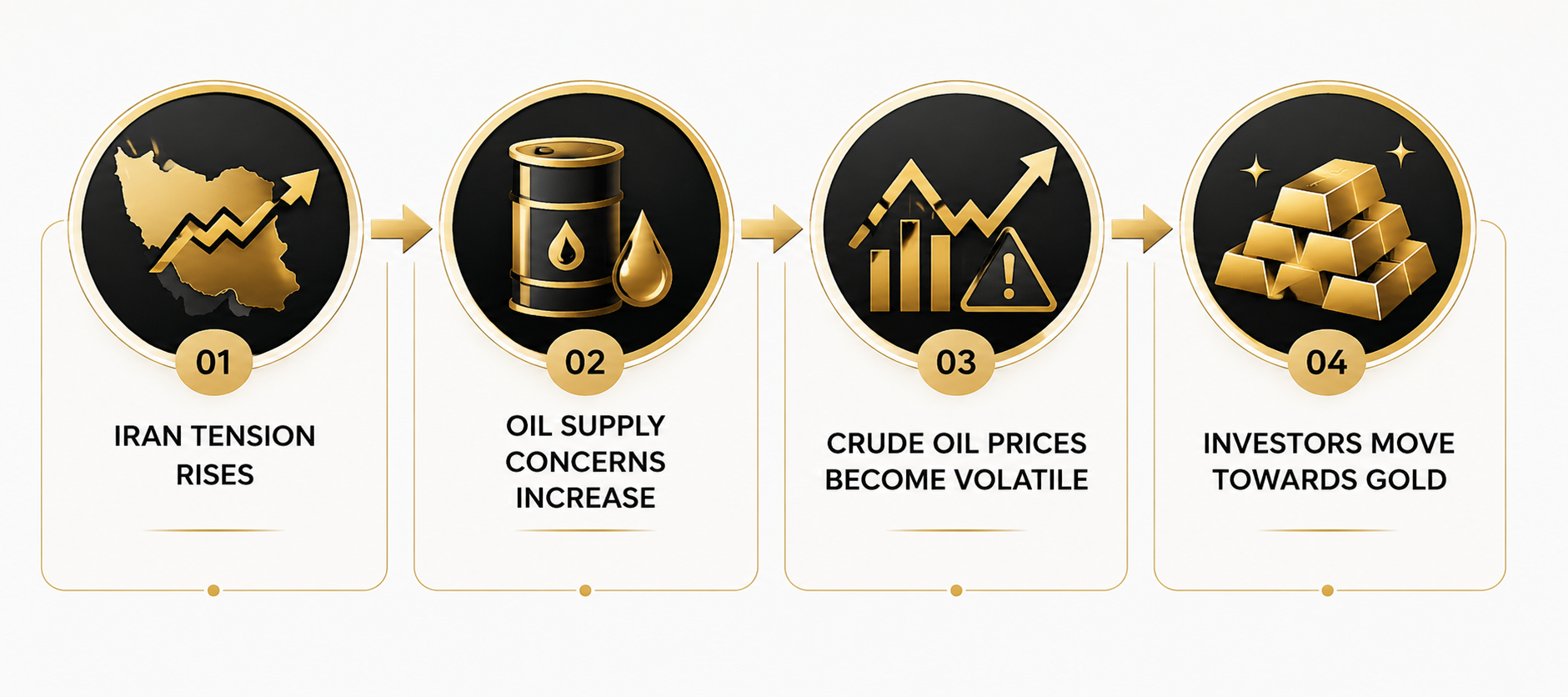
Because of this connection, any conflict involving Iran often impacts not just oil prices but also precious metals like gold and silver.
What Could Happen If the Conflict Ends?
If geopolitical tensions involving Iran ease significantly, the immediate reaction in global markets could be reduced panic and improved investor confidence.
This may lead to:
- Reduced safe-haven demand for gold
- Stronger stock market sentiment
- Stabilisation in crude oil prices
- Lower volatility in global markets
As investor confidence improves, some money may move out of gold and back into equities or other growth-focused investments. This can create short-term pressure on gold prices. However, this does not necessarily mean gold prices will crash sharply.
The Relationship Between Oil Prices and Gold
One of the biggest reasons the Iran situation affects gold is its influence on crude oil prices.
When conflicts intensify:
- Oil prices often rise
- Inflation concerns increase
- Gold demand strengthens
If tensions reduce and oil prices stabilise, inflation fears may also ease. This could reduce one of the major factors supporting high gold prices.
India is heavily dependent on oil imports, so fluctuations in crude oil directly affect:
- Inflation
- Currency movement
- Economic sentiment
Since gold prices in India are influenced by both international gold rates and the rupee-dollar exchange rate, oil price movements indirectly impact domestic gold prices as well.
Will Gold Prices Fall Immediately?
Not necessarily.
Gold prices are influenced by multiple global factors simultaneously. Even if the Iran conflict eases, other economic concerns may continue supporting gold.
These include:
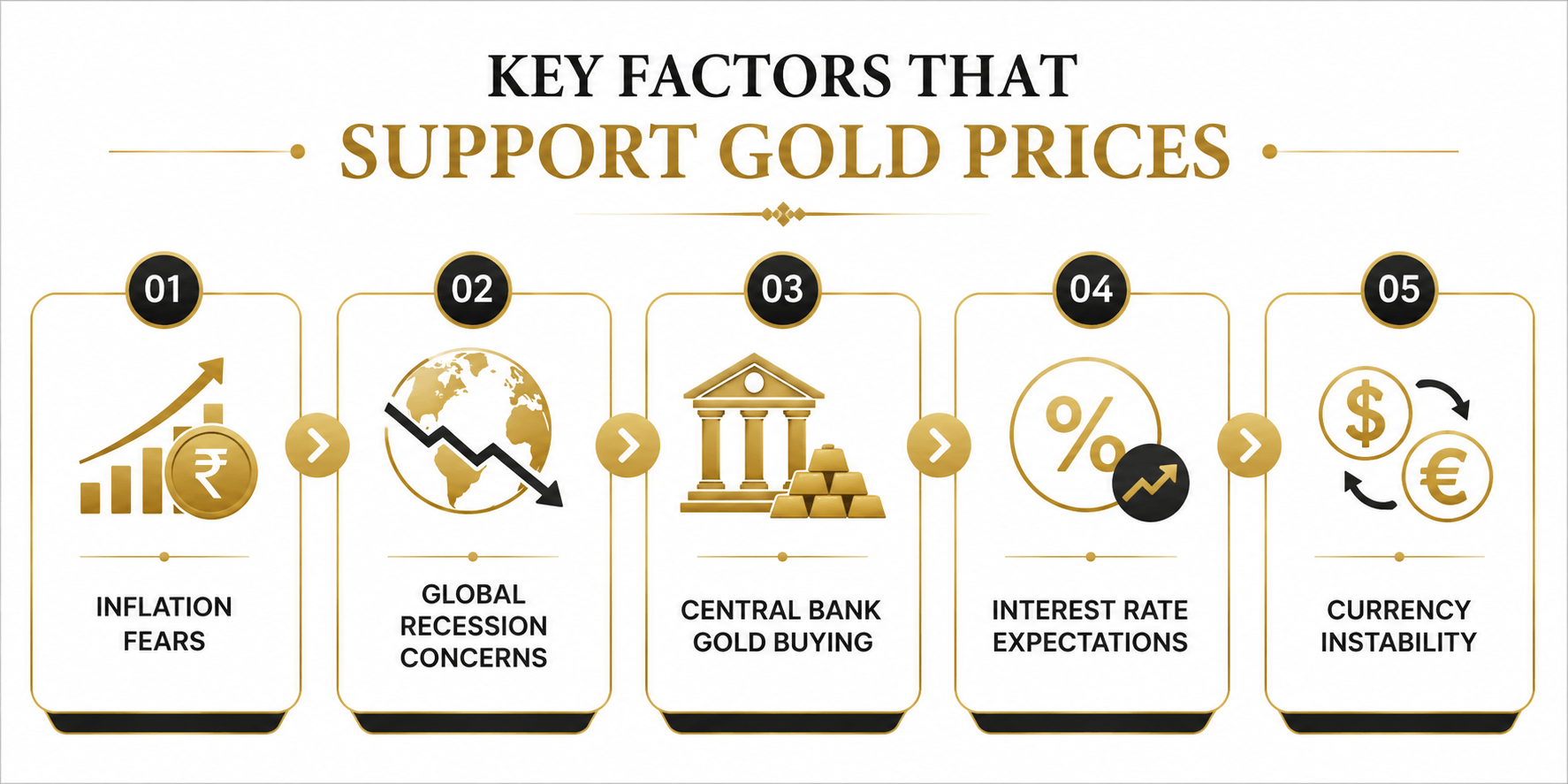
In fact, analysts suggest that even after temporary declines linked to geopolitical developments, gold’s broader long-term trend may remain strong due to ongoing economic uncertainty.
This means gold could experience short-term corrections without necessarily entering a long-term downtrend.
Impact on Gold Rates in India
For Indian buyers, gold prices are influenced by much more than just international headlines or global market movements. Domestic gold rates depend on several important factors, including global gold prices, the rupee versus US dollar exchange rate, import duties and taxes, as well as local demand during festivals and wedding seasons.
Even if international gold prices soften slightly after positive geopolitical developments, a weaker rupee can still keep gold prices elevated in India. For instance, if global gold prices decline but the rupee weakens against the US dollar, domestic gold rates may remain high. On the other hand, if global gold prices fall and the rupee strengthens, Indian gold prices could witness a more noticeable decline. This is why gold prices in India do not always move exactly in line with global markets.
What Jewellery Buyers Should Consider
For jewellery buyers in India, trying to perfectly predict short-term gold price movements can be difficult.
Instead of waiting endlessly for prices to fall, buyers should focus on:
- Purchasing hallmarked gold
- Choosing trusted jewellers
- Monitoring making charges and festive offers
- Buying according to long-term needs
Festivals, weddings, and important occasions usually matter more to buyers than temporary price fluctuations.
Historically, people who consistently purchased gold over time have often benefited despite short-term volatility.
The Bigger Picture for Gold Investors
The relationship between global conflicts and gold prices highlights an important reality: gold is influenced by a combination of emotional, economic, and geopolitical factors. While headlines related to Iran and other global tensions may create short-term fluctuations in gold prices, the long-term trend of gold is generally driven by broader economic conditions and investor confidence.
Instead of reacting emotionally to temporary market news, investors should focus on long-term diversification, wealth preservation, and consistent investment strategies. Gold has successfully maintained its value through wars, recessions, inflation cycles, and major market crashes for centuries. This long history of resilience is one of the key reasons why gold continues to remain a trusted long-term asset for investors around the world.
Will Peace Hurt Gold? What Indian Investors Need to Know
The possible end of the Iran conflict could temporarily reduce safe-haven demand for gold and create short-term price corrections. However, gold prices in India depend on multiple interconnected factors, including oil prices, inflation, currency movement, and global investor sentiment.
While geopolitical peace may reduce immediate market fear, gold’s role as a trusted long-term asset is unlikely to disappear. For Indian investors and jewellery buyers, the smartest approach is to focus on long-term value rather than short-term market noise.
Gold may fluctuate in the short run, but its importance in wealth preservation and financial security continues to remain timeless.
If you are considering buying gold, focus on quality and trust rather than waiting for the perfect price. Choosing hallmarked gold from a reliable jeweller ensures purity, transparency, and long-term value regardless of short-term market fluctuations.
About Author

Babita Agrawal
Babita Agrawal is a visionary jewellery designer with over 30 years of experience in the industry. Founder of Babita Agrawal Jewellery, she began her journey from a small cabin and built one of Mumbai’s most admired boutique jewellery brands. Her commitment to blending traditional aesthetics with modern artistry defines each elegant creation, making her a respected name in luxury jewellery.