

Why Electronic Gold Receipts are the Most Tax-Efficient Way to Buy Gold?
Gold has always been one of India’s most trusted investment assets. Traditionally, people purchased physical gold in the form of jewellery, coins, or bars. While physical ownership continues to hold emotional and cultural importance, modern investors are now exploring smarter and more efficient ways to invest in gold.
One such innovation is the Electronic Gold Receipt (EGR). As digital investment methods evolve, EGRs are gaining attention for their transparency, convenience, and potential tax efficiency.
For investors who want exposure to gold without the challenges of physical storage and high transactional costs, Electronic Gold Receipts offer a modern alternative worth understanding.
What Are Electronic Gold Receipts?
Electronic Gold Receipts, commonly known as EGRs, are digital representations of physical gold stored in secure vaults. They are traded on regulated exchanges, allowing investors to buy and sell gold electronically without physically handling the metal.
In simple terms, when you purchase an EGR:
- You own gold in digital form
- The corresponding physical gold is securely stored
- Your ownership is recorded electronically
This system combines the value of physical gold with the convenience of digital trading.
How EGRs Work?
The process behind Electronic Gold Receipts is relatively straightforward. Physical gold is deposited into authorized vaults after meeting quality and purity standards. Once verified, an equivalent electronic receipt is generated and credited to the investor.
These receipts can then be:
- Bought or sold on exchanges
- Converted into physical gold (subject to conditions)
- Held as a long-term investment asset
Because the system is exchange-regulated, it offers greater transparency and standardization compared to many informal gold transactions.
Because of this connection, any conflict involving Iran often impacts not just oil prices but also precious metals like gold and silver.
Why Tax Efficiency Matters in Gold Investment?
When investing in gold, returns are important, but so is taxation. Many investors focus only on price appreciation without considering the impact of taxes, storage costs, and transactional expenses.
Tax efficiency means maximizing investment value while minimizing unnecessary costs and tax burdens.
Physical gold purchases often involve:
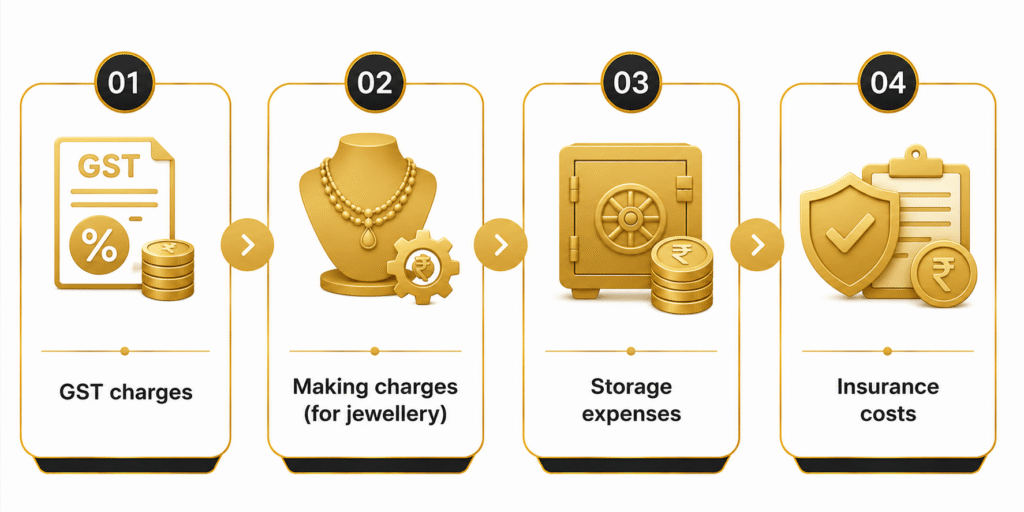
Electronic Gold Receipts help reduce some of these additional costs, making them more financially efficient for certain types of investors.
Cost and Transparency Advantages of EGRs
EGRs are gaining attention for their cost efficiency compared to physical gold. Here is why:
- Fully Regulated by SEBI: Every transaction is exchange-traded and officially recognized, giving investors complete legal protection and peace of mind.
- Digitally Recorded Transactions: All buying and selling is digitally tracked and documented, making it easier to maintain accurate investment records at all times.
- Transparent Pricing: Prices are openly listed on exchanges in real time no dealer negotiation, no inconsistent pricing, no surprises.
- Zero Making Charges: Unlike gold jewellery, EGRs carry no making charges, design fees, or wastage deductions your money goes purely into gold value.
- No Storage or Insurance Costs: Physical gold requires locker fees and insurance. With EGRs, gold is stored in regulated vaults at no extra personal cost to you.
For investors focused on efficiency, EGRs offer a cleaner and more cost-transparent way to own gold.
No Making Charges Like Jewellery
One of the biggest advantages of EGRs is that they eliminate jewellery-related making charges.
When buying gold jewellery:
- Buyers pay for craftsmanship
- Design complexity increases cost
- Resale value may not fully recover these charges
EGRs focus purely on gold value rather than ornamentation. This means investors gain exposure to the metal itself without paying extra for manufacturing or design.
For people investing in gold primarily for financial purposes, this can make a noticeable difference over time.
Reduced Storage and Security Costs
Physical gold ownership comes with practical concerns:
- Safe storage at home
- Bank locker fees
- Insurance costs
- Risk of theft or damage
Electronic Gold Receipts solve these issues because the gold is professionally stored in regulated vaults.
This reduces:
- Personal storage responsibility
- Additional annual expenses
- Security risks associated with physical possession
For investors seeking convenience and safety, this is a major advantage.
Better Transparency and Standardization
The traditional gold market has always had one big problem: you can never be fully sure about purity, pricing, or whether the seller is trustworthy. Many buyers have faced situations where the gold quality did not match what was promised, or the pricing was inconsistent from one dealer to another.
EGRs solve this completely. Since they operate within an SEBI-regulated exchange environment, every transaction is standardized and verified. The purity of gold is certified, the pricing is openly visible to everyone, and the risk of fraud is significantly reduced.
For investors who value trust and long-term planning, this level of transparency makes EGRs a far more reliable option than traditional gold buying.
EGRs vs Physical Gold: Which Is Better?
The choice between Electronic Gold Receipts and physical gold depends on your goals.
Physical Gold | Electronic Gold Receipts (EGRs) |
Best for jewellery, gifting, and long-term holding | Best for investment and trading |
Tangible ownership of physical gold | Demat-based digital ownership backed by physical gold |
High emotional and cultural value | More convenient and liquid for investors |
Requires physical storage and security | No personal storage required |
May include making charges and storage costs | Lower storage/transaction costs |
Can be used directly as jewellery | Cannot be worn or used physically unless converted |
In many cases, investors choose a balanced approach by holding both physical and electronic gold depending on their needs.
Challenges and Limitations of EGRs
While EGRs offer several benefits, they are not completely without limitations.
Some investors may still prefer physical possession because digital ownership lacks emotional satisfaction. Additionally, understanding exchange mechanisms and digital trading platforms may require basic financial awareness.
Market liquidity and adoption are also still evolving compared to traditional gold buying habits in India.
However, as awareness grows, Electronic Gold Receipts are expected to become more mainstream among modern investors.
Are Electronic Gold Receipts the Smarter Way to Invest in Gold?
Electronic Gold Receipts are emerging as one of the most efficient ways to invest in gold for modern investors. By reducing storage concerns, eliminating making charges, and offering transparent digital transactions, EGRs provide a smarter alternative for those focused on financial efficiency.
While physical gold will always remain emotionally valuable, Electronic Gold Receipts offer a practical and tax-conscious solution for investment-focused buyers.
Understanding both options allows investors to make informed decisions based on their goals, lifestyle, and long-term financial strategy.
If you are exploring gold as an investment, understanding the difference between physical gold and Electronic Gold Receipts can help you make a more informed and financially sound decision based on your personal goals.
About Author

Babita Agrawal
Babita Agrawal is a visionary jewellery designer with over 30 years of experience in the industry. Founder of Babita Agrawal Jewellery, she began her journey from a small cabin and built one of Mumbai’s most admired boutique jewellery brands. Her commitment to blending traditional aesthetics with modern artistry defines each elegant creation, making her a respected name in luxury jewellery.