
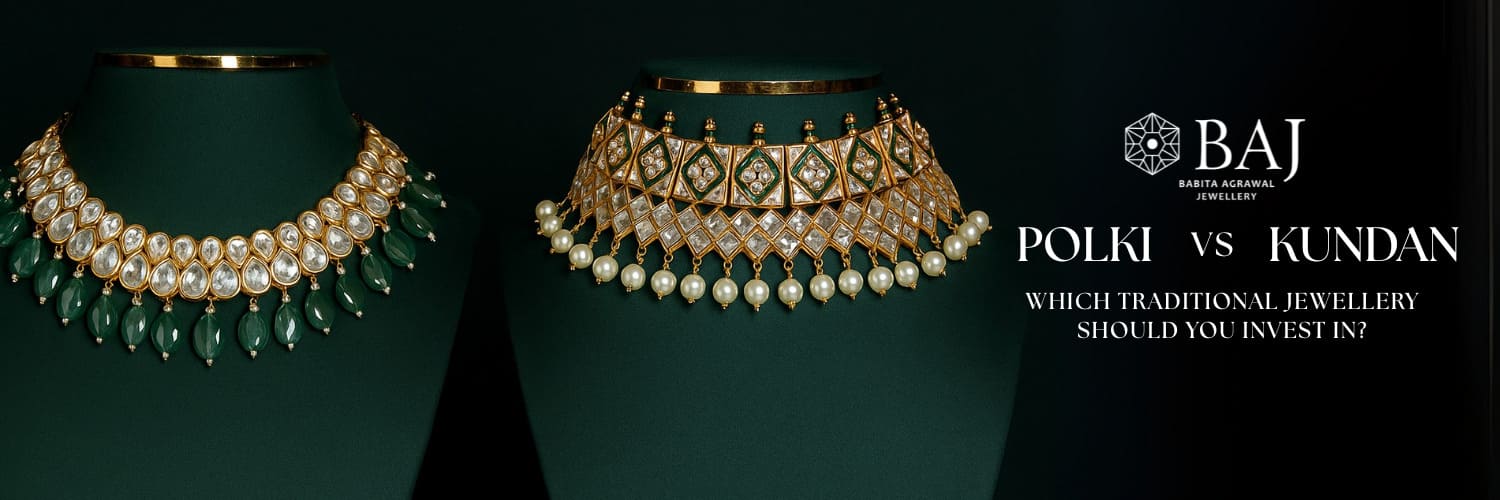
Polki vs. Kundan: Which Traditional Jewellery Should You Invest In?
Traditional Indian jewellery is a timeless expression of culture, heritage, and artistry. Among the most cherished forms are Polki and Kundan jewellery, both known for their rich aesthetics and intricate craftsmanship. While they may appear similar at a glance, each has its own story, appeal, and investment value.
So, if you’re planning to invest in heirloom-worthy pieces or searching for the perfect wedding jewellery, the question arises: Polki or Kundan? Which one should you choose? Let’s dive into their differences, beauty, and benefits to help you make a confident and informed decision.
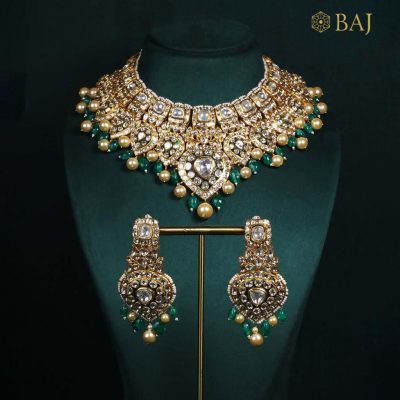
What is Polki Jewellery?
Polki jewellery is crafted using uncut, natural diamonds in their raw form. These diamonds are not polished or treated, giving Polki a rustic and brilliant charm that reflects light in a unique way. The setting technique involves placing uncut diamonds into a gold foil base that enhances their natural glow.
Polki originated during the Mughal era and is known for its royal grandeur. It is often associated with bridal wear and high-value heirloom pieces.
Key Features of Polki Jewellery
- Made using natural, uncut diamonds
- High intrinsic value due to diamond content
- Usually heavier and more ornate
- Natural, subtle sparkle
- Ideal for bridal, festive, and statement occasions
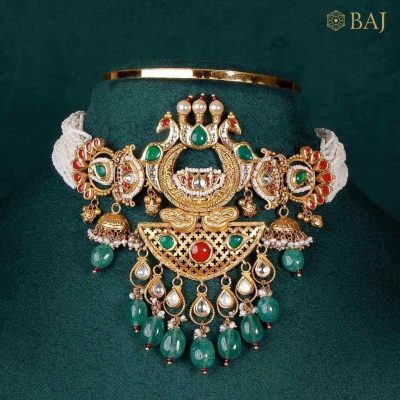
What is Kundan Jewellery?
Kundan jewellery, on the other hand, uses glass stones or synthetic gemstones instead of diamonds. These are set using a highly skilled technique where the stones are inserted into lac (a type of resin) and secured with gold foil.
Originating from Rajasthan and Gujarat, Kundan is deeply rooted in Indian royalty and is a staple in traditional weddings, dance performances, and religious ceremonies.
Key Features of Kundan Jewellery
- Uses glass or synthetic stones
- Focuses more on design than material value
- Lightweight and versatile
- Highly decorative with enamel (meenakari) backing
- Budget-friendly alternative to Polki
Polki vs. Kundan: What’s the Price Difference?
When it comes to investment value, Polki outshines Kundan due to the presence of real diamonds. Since Polki jewellery is handcrafted with uncut diamonds and high-purity gold (often 18kt or 22kt), the cost is significantly higher.
In contrast, Kundan jewellery is more affordable because it uses imitation or semi-precious stones and less gold. This makes Kundan a preferred choice for those who want the royal look without a steep price tag.
Aspect | Polki | Kundan |
Material | Uncut natural diamonds | Glass stones/semi-precious stones |
Gold Content | High (18kt–22kt) | Moderate to low |
Craftsmanship | Highly skilled & time-consuming | Intricate but faster |
Price Range | Premium | Mid-range to budget-friendly |
Investment Value | High (diamond content) | Low (decorative value) |
Aesthetic Appeal: What Suits You Best?
If you’re drawn to regal, bold, and antique looks, Polki jewellery is ideal. It’s perfect for brides, collectors, and those who prefer investing in statement pieces that appreciate over time.
However, if you prefer artistic, colourful, and budget-friendly styles, Kundan jewellery offers an equally beautiful alternative. It’s versatile enough to pair with lehengas, sarees, or even Indo-western outfits and is available in a wide range of enamel finishes and colours.
Durability & Maintenance
Since Polki uses natural diamonds, it requires delicate handling and proper storage. Exposure to moisture or harsh chemicals can damage the gold foil setting.
Kundan jewellery, though beautiful, is more delicate due to the use of glass stones and resin. Regular care is needed to preserve its shine and prevent tarnishing.
Maintenance Tip:
Whether you choose Polki or Kundan, always store your jewellery in a soft cloth-lined box, double packed in polythene, away from direct sunlight and humidity. Avoid perfume or water contact.
Which One Should You Invest In?
If you’re buying jewellery purely for its aesthetic and decorative appeal (and the cost is a factor), Kundan is a fantastic choice. It’s rich, regal, and perfect for festive seasons and weddings.
But if you’re looking for long-term investment, Polki wins hands down. Its uncut diamonds hold real value, and over time, well-maintained Polki jewellery becomes an heirloom passed across generations.
When deciding between Polki and Kundan, consider your purpose, style preference, and budget. Both jewellery types have their timeless charm and continue to grace bridal trousseaus and festive wardrobes across India.
At Babita Agrawal Jewellery, we offer an exquisite range of both Polki and Kundan pieces, each handcrafted to perfection, carrying the legacy of India’s regal jewellery traditions. Whether you’re a bride-to-be, a collector, or simply someone who loves traditional artistry, we’ll help you find the piece that speaks to your heart and fits your wardrobe and investment goals.
About Author
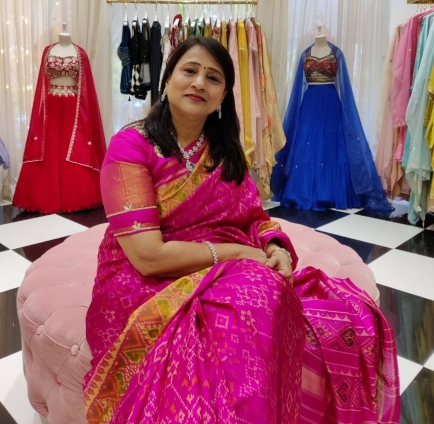
Babita Agrawal
Babita Agrawal is a visionary jewellery designer with over 30 years of experience in the industry. Founder of Babita Agrawal Jewellery, she began her journey from a small cabin and built one of Mumbai’s most admired boutique jewellery brands. Her commitment to blending traditional aesthetics with modern artistry defines each elegant creation, making her a respected name in luxury jewellery.